Feedback and Practice Turn Advice into Behaviour Change
A manager gives thoughtful feedback after a difficult meeting. You agree with it and understand what you could do differently. Yet the next conversation unfolds in much the same way.
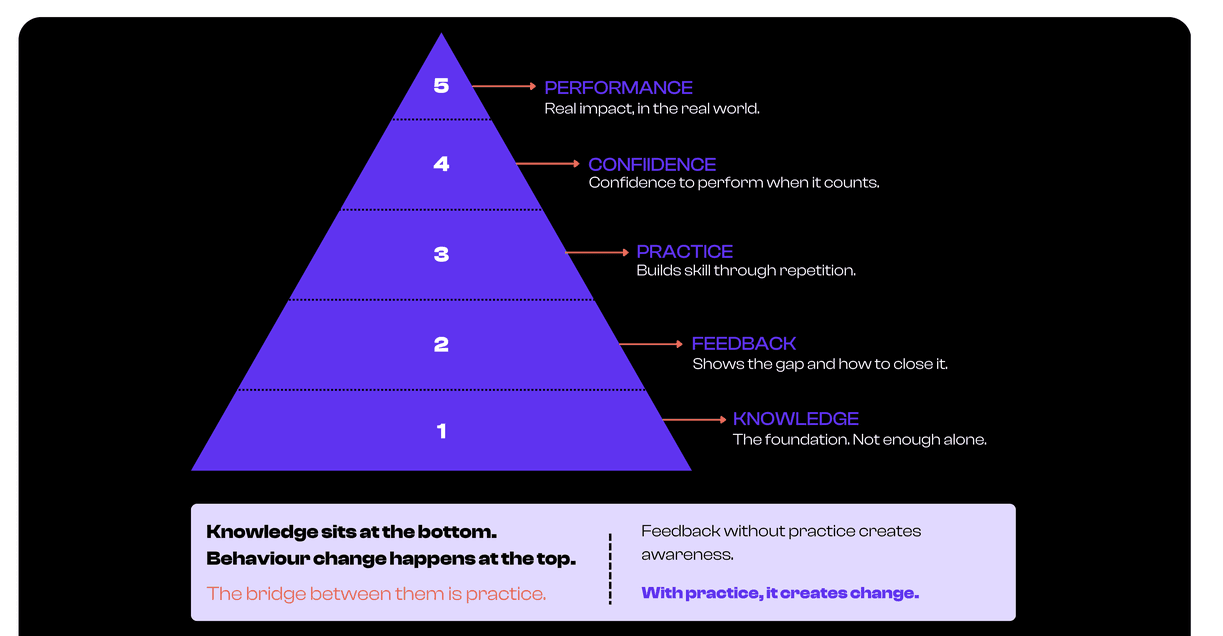
Knowing what to do and being able to do it are different things. Feedback can identify an opportunity for improvement, but learners also need a chance to put the advice into action.
Making feedback useful in the moment
Many organisations rely on occasional performance reviews or discussions held long after an event. Regular, relevant feedback brings coaching closer to the moment when someone can use it.
Gallup found that 80% of employees who said they had received meaningful feedback in the previous week were fully engaged. That finding concerns engagement; the practical challenge is also giving people an opportunity to act on the feedback.
The behaviour change pyramid illustrates the journey from knowledge through reflection and practice to confidence and performance. Practice is the step that turns an idea into something a learner can try.
Giving feedback a next attempt
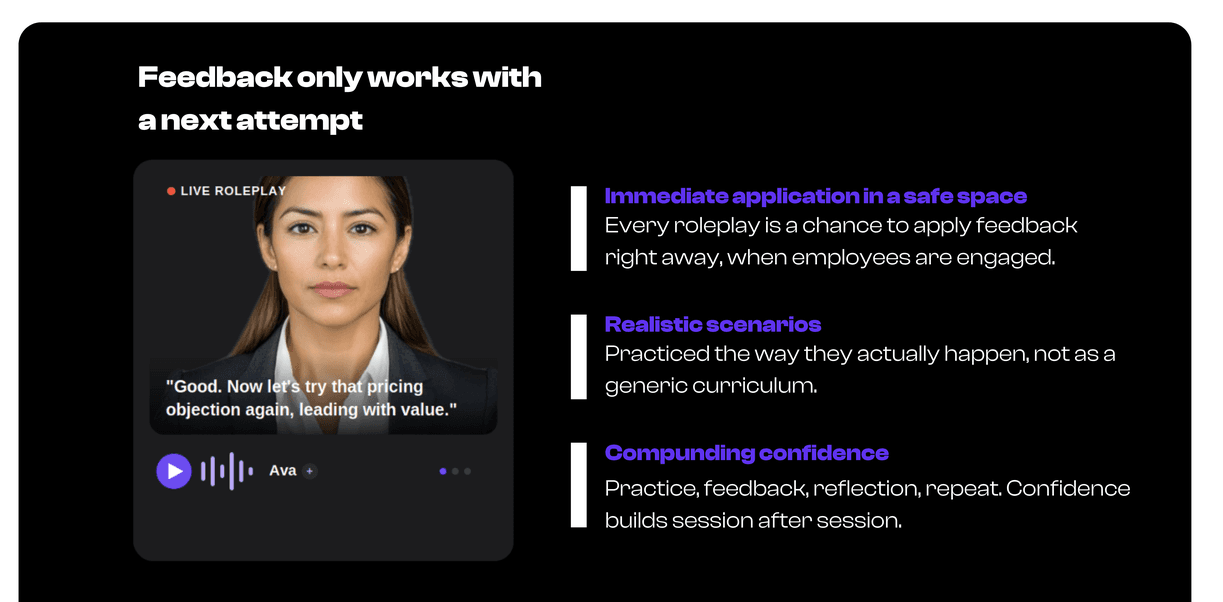
Conversational practice allows learners to apply advice immediately in a relevant scenario. They can rehearse objection handling, giving feedback or another difficult conversation, then try a different approach while the lesson is still fresh.
The scenario needs to reflect the situations learners actually face. A realistic exchange gives them something concrete to work with and makes the feedback easier to connect to day-to-day performance.
Building confidence through repetition
Each new attempt creates another opportunity to practise the behaviour that needs work. Repetition and feedback help learners refine their approach across sessions, with confidence developing alongside the experience.
Useful feedback is timely and specific. Pairing it with realistic practice gives learners the next step: a place to turn advice into action.