AI Roleplay White Paper: The New Standard for Corporate Training
Real behaviour change doesn't come from another slide, video or quiz. It comes from practice: making mistakes and repeating until the right reflex becomes natural. Our white paper "AI Roleplay: the new standard for corporate training" explains why. It is a guide for L&D and training leaders who are evaluating AI-powered roleplay. Download the white paper (PDF)
Below is a short summary of its six parts.
Why traditional training hits a ceiling
There is a well-documented gap between understanding how to handle a difficult conversation and actually being able to do it in the room, under pressure, with a person who pushes back or shuts down. Only 15–20% of the behaviours taught in training are still observed on the job weeks later, and up to 80% of new material can be forgotten within a month without any reinforcement.
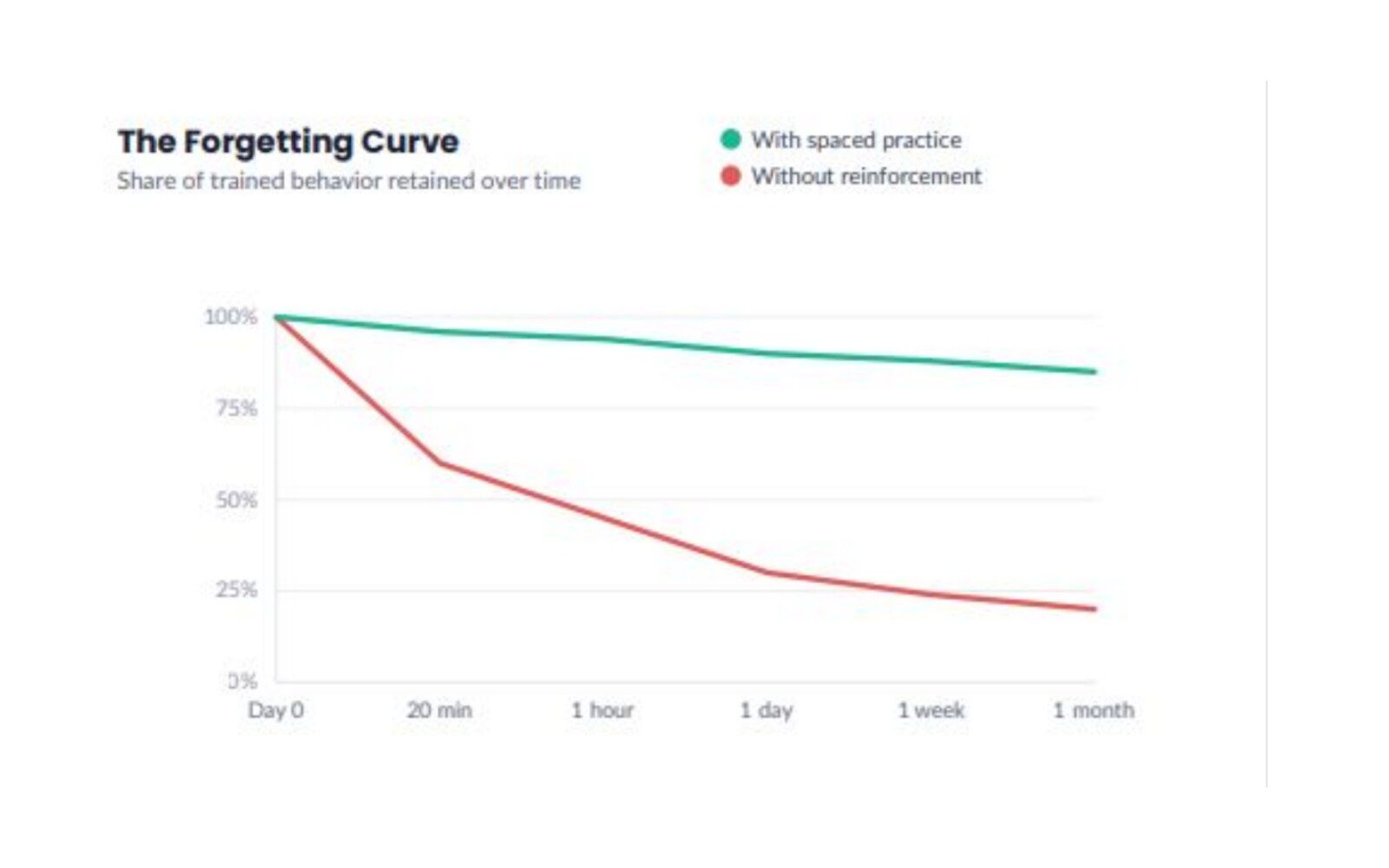
It isn't a budget problem, but a method problem: knowledge was transmitted, but the behaviour was never actually rehearsed. In-person workshops build culture and connection, e-learning solved the scale problem, and virtual classrooms add interaction at a distance. None of them gives every learner real, repeated practice, and almost no one takes real risks in front of colleagues.
What AI avatar roleplay actually is
AI roleplay is a visual, interactive training method where learners have real-time, unscripted conversations with virtual characters. The AI analyses what is said and how it is said, and adapts the conversation like a real person would. At the end of the session, learners get a detailed analysis of their performance against a specific learning framework: not just a score, but exactly what to change.
It is not a chatbot, not a quiz and not a game. Every learner gets their own full conversation instead of two minutes of a group roleplay, and can repeat it as often as needed. The white paper also describes the four parts of the Meta-Skills platform: Avatar Academy, Avatar Studio, Avatars & Roles and Data Insights.
Why it works: the science of practice
Learning by doing activates several cognitive mechanisms at once: active encoding, emotional anchoring and progressive consolidation. Passively watching or reading mostly activates sensory processing, so the information fades quickly. In a simulation, the mistake is part of the lesson: nothing is damaged, and it produces feedback the learner can act on. The core loop is simple: try, fail, understand, improve.
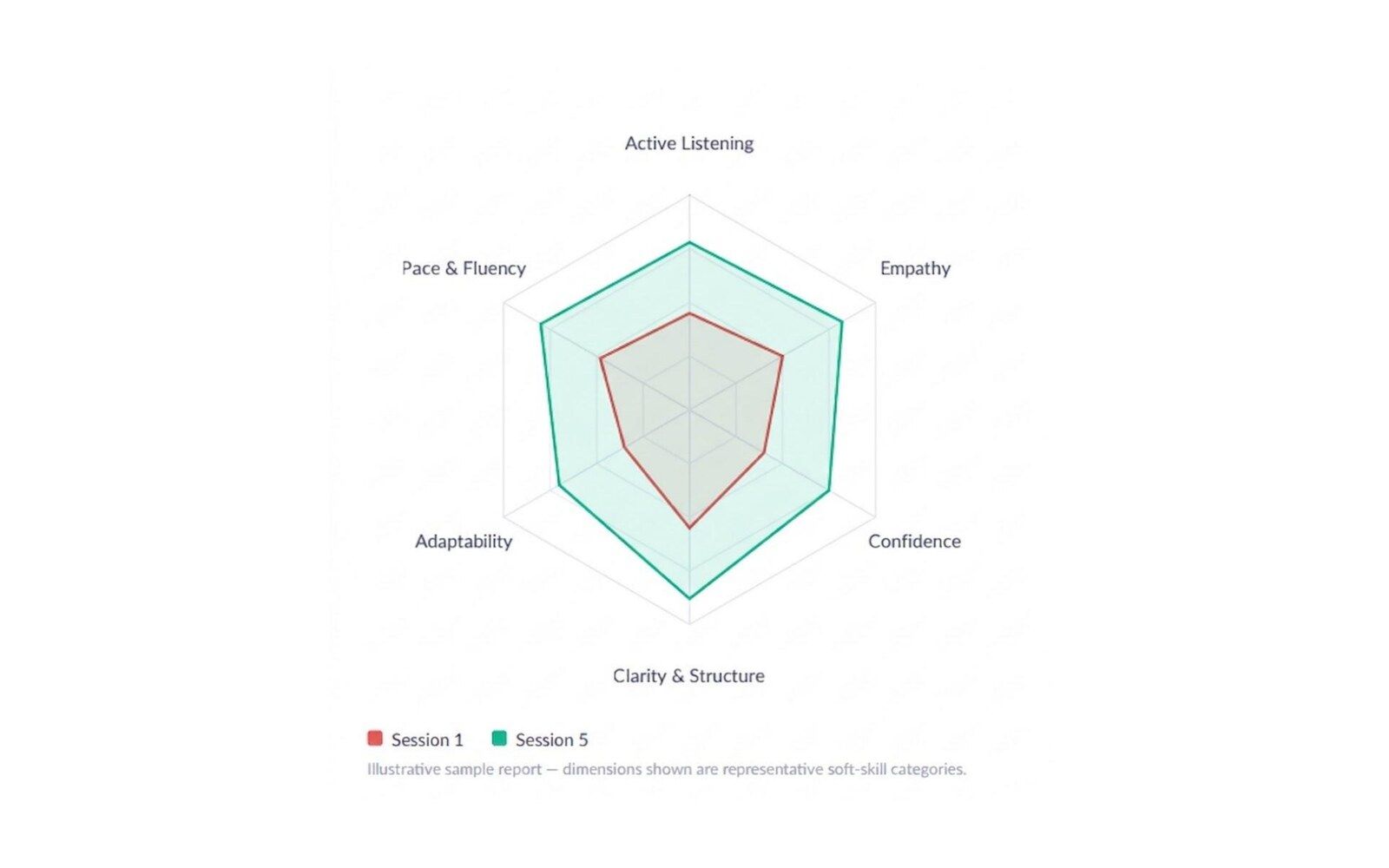
That feedback has to be precise enough to act on. Instead of a vague "improve your communication", a learner sees exactly what to work on, with a short action plan for the next session.
Where it delivers results
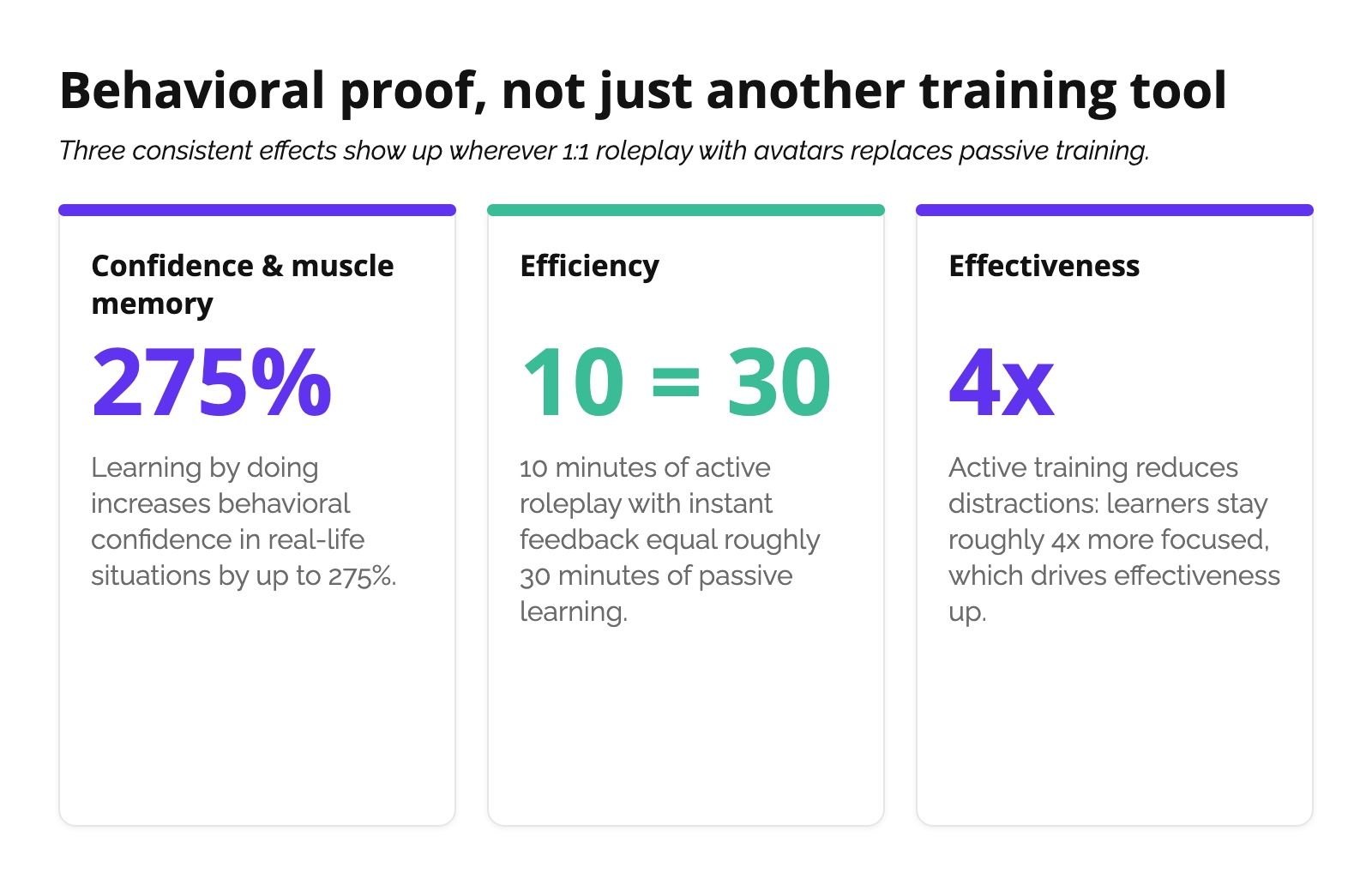
AI roleplay is most powerful where the skill is behavioural, repetition matters and the real-world stakes are high. Wherever one-to-one roleplay with avatars replaces passive training, three effects show up: up to 275% more confidence in real-life situations, 10 minutes of active roleplay worth about 30 minutes of passive learning, and learners who stay about 4x more focused.
The white paper covers five use cases to get started (career starters, first-time leaders, sales, customer service and HR) and real outcomes from organisations, such as a global sales training programme with 12,000 reps trained.
The market is moving fast
AI roleplay has moved from niche pilot to board-level line item. Sales enablement, leadership development and onboarding teams now budget for practice-based training directly. As the white paper puts it: "The question for L&D leaders is no longer if roleplay-based training belongs in the stack, it's which solution fits your use cases."
What to look for in a solution
The white paper ends with a buyer's checklist of six points: realism of the experience, reporting capabilities, use-case and content depth, flexibility and integration, data security and privacy, and pricing.
Download the full white paper (PDF) to read all six parts in detail.